
Road And Traffic Signs 1

What does this sign mean?
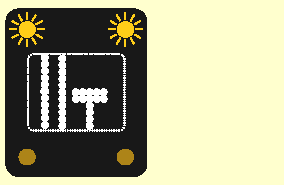
You should change lanes as directed by the sign. Here, the right-hand lane is closed but the left-hand and centre lanes are available. Merging in turn is recommended when it’s safe and traffic is going slowly; for example, at roadworks or a road traffic incident. When vehicles are travelling at speed, this isn’t advisable and you should move into the appropriate lane in good time.
What does this temporary sign indicate?

In the interests of road safety, temporary mandatory speed limits are imposed at all major roadworks. Signs like this, giving advance warning of the speed limit, are normally placed about three-quarters of a mile ahead of where the speed limit comes into force.
You’re waiting at a T-junction. A vehicle is coming from the right, with its left indicator flashing. What should you do?
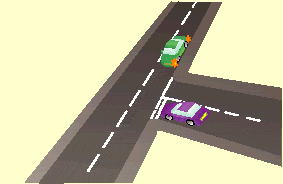
Other road users may give misleading signals. When you’re waiting at a junction, don’t emerge until you’re sure of their intentions.
What’s the reason for the yellow crisscross lines painted on the road here?

Yellow ‘box junctions’ like this are often used where it’s busy. Their purpose is to keep the junction clear for crossing traffic. Don’t enter the painted area unless your exit is clear. The one exception is when you’re turning right and are only prevented from doing so by oncoming traffic or by other vehicles waiting to turn right.
When can you park on these markings outside a school?
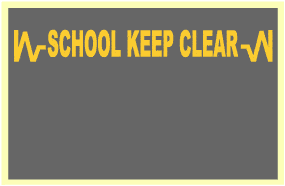
You shouldn’t stop on yellow zigzag lines outside schools, not even to set down or pick up children or other passengers. This is to make sure passing drivers and pedestrians have an unobstructed view.
What does this sign mean?

You won’t be able to find a through route to another road. Use this road only for access.
What does this traffic sign mean?

The sign gives you an early warning of a speed restriction. If you’re travelling at a higher speed, slow down in good time. You could come across queuing traffic due to roadworks or a temporary obstruction.
What does this sign mean?
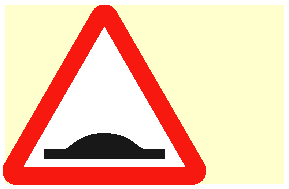
These humps have been put in place to slow the traffic down. They’re usually found in residential areas. Slow down to an appropriate speed.
Advertisement
ArrayWhat does this sign mean?
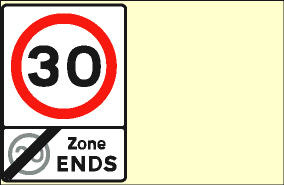
Where you see this sign, the 20 mph restriction ends. Check all around for possible hazards and only increase your speed if it’s safe to do so.
What does this sign mean?

You should be careful in these locations, as the road surface is likely to be wet and slippery. There may be a steep drop to the water, and there may not be a barrier along the edge of the road.
What should you do when you see this sign at a crossroads?

When traffic lights are out of order, treat the junction as an unmarked crossroads. Be very careful and be prepared to stop; no-one has priority.
Which arm signal tells you that the car you’re following is going to pull up?


There may be occasions when drivers need to give an arm signal to confirm their intentions. This could include in bright sunshine, at a complex road layout, when stopping at a pedestrian crossing or when turning right just after passing a parked vehicle. You should understand what each arm signal means. If you give arm signals, make them clear, correct and decisive.
What shape is a ‘stop’ sign at a junction?


To make it easy to recognise, the ‘stop’ sign is the only sign of this shape. You must stop and take effective observation before proceeding.
You’re about to overtake. What should you do when you see this sign?
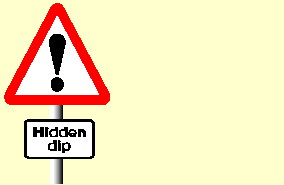
You won’t be able to see any hazards that might be hidden in the dip. As well as oncoming traffic, the dip may conceal cyclists, horse riders, parked vehicles or pedestrians in the road.
At traffic lights, what does it mean when the amber light shows on its own?

When the amber light is showing on its own, the red light will follow next. The amber light means stop, unless you’ve already crossed the stop line or you’re so close to it that stopping may cause a collision.
Your vehicle is stationary. When may you use its horn?
When your vehicle is stationary, only sound the horn if you think there’s a risk of danger from another road user. Don’t use it just to attract someone’s attention. This causes unnecessary noise and could be misleading.
At a railway level crossing, the red lights continue to flash after a train has gone by. What should you do?
You must always obey red flashing stop lights. If a train passes but the lights continue to flash, another train will be passing soon. Cross only when the lights go off and the barriers open.
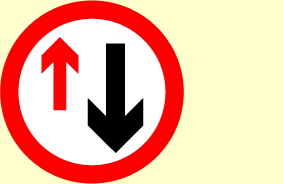
What does this traffic sign mean?
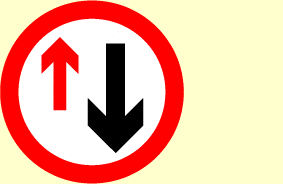
Priority signs are normally shown where the road is narrow and there isn’t enough room for two vehicles to pass. Examples are narrow bridges, roadworks and where there’s a width restriction. Make sure you know who has priority; don’t force your way through. Show courtesy and consideration to other road users.
What does this sign mean?
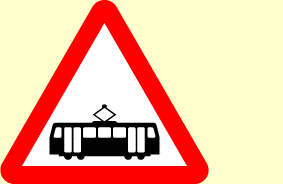
This sign tells you to beware of trams. If you don’t usually drive in a town where there are trams, remember to look out for them at junctions and look for tram rails, signs and signals.
Which of these signs shows that you’re entering a one-way system?
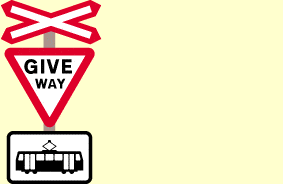


If the road has two lanes, you can use either lane and overtake on either side. Use the lane that’s more convenient for your destination unless signs or road markings indicate otherwise.
What do these zigzag lines at pedestrian crossings mean?

The approach to, and exit from, a pedestrian crossing is marked with zigzag lines. You mustn’t park on them or overtake the leading vehicle when approaching the crossing. Parking here would block the view for pedestrians and approaching traffic.
What does this sign mean?

Even though you’ve left the restricted area, make sure that you park where you won’t endanger other road users or cause an obstruction.
What does this sign mean?
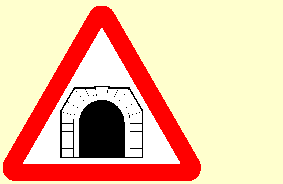
When approaching a tunnel, switch on your dipped headlights. Be aware that your eyes might need to adjust to the sudden darkness. You may need to reduce your speed.
You’re driving in busy traffic. You want to pull up on the left just after a junction on the left. When should you signal?
You need to signal to let other drivers know your intentions. However, if you indicate too early, they may think you’re turning left into the junction. Correct timing of the signal is very important to avoid misleading others.
A police car is following you. The police officer flashes the headlights and points to the left. What should you do?
You must pull up on the left as soon as it’s safe to do so and switch off your engine.
The driver of the car in front is giving this arm signal. What does it mean?

There might be an occasion where another driver uses an arm signal. This may be because the vehicle’s indicators are obscured by other traffic. In order for such signals to be effective, all drivers should know their meaning. Be aware that the ‘left turn’ signal might look similar to the ‘slowing down’ signal.
What does this sign mean?
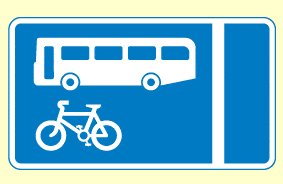
Buses and cycles can travel in this lane. In this example, they’ll flow in the same direction as other traffic. If it’s busy, they may be passing you on the left, so watch out for them. Times on the sign will show the lane’s hours of operation; if no times are shown, or there’s no sign at all, this means the lane is in operation 24 hours a day. In some areas, other vehicles, such as taxis and motorcycles, are allowed to use bus lanes. The sign will show if this is the case.
You see this line across the road at the entrance to a roundabout. What does it mean?

Slow down as you approach the roundabout and check for traffic from the right. If you need to stop and give way, stay behind the broken line until it’s safe to emerge onto the roundabout.
Why should you make sure that your indicators are cancelled after turning?
Leaving your indicators on could confuse other road users and may even lead to a crash. Be aware that if you haven’t taken a sharp turn, your indicators may not self-cancel and you’ll need to turn them off manually.
Other drivers may sometimes flash their headlights at you. In which situation are they allowed to do this?
If other drivers flash their headlights, this isn’t a signal to show priority. The flashing of headlights has the same meaning as sounding the horn: it’s a warning of their presence.
You’re in the left-hand lane at traffic lights, waiting to turn left. At which of these traffic lights mustn’t you move on?


At some junctions, there may be separate signals for different lanes. These are called ‘filter’ lights. They’re designed to help traffic flow at major junctions. Make sure that you’re in the correct lane and proceed if the way is clear and the green light shows for your lane.
What does this sign mean?

If you intend to stop and rest, this sign allows you time to reduce speed and pull over safely.
When may you sound the horn?
Never sound the horn aggressively. You mustn’t sound it when driving in a built-up area between 11.30 pm and 7.00 am, or when you’re stationary, unless another road user poses a danger. Don’t scare animals by sounding your horn.
You’re approaching a zebra crossing where pedestrians are waiting. Which arm signal might you give?


A ‘slowing down’ signal will indicate your intentions to oncoming and following vehicles. Be aware that pedestrians might start to cross as soon as they see this signal.
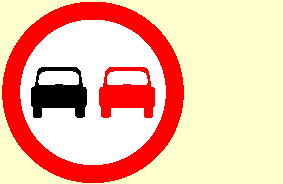
What does this sign mean?
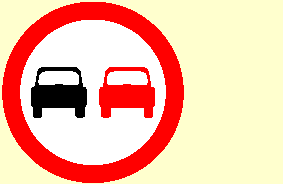
Road signs that prohibit overtaking are placed in locations where passing the vehicle in front is dangerous. If you see this sign, don’t attempt to overtake. The sign is there for a reason; you must obey it.
What does this sign mean?

Look well ahead and be ready to stop for any pedestrians crossing, or about to cross, the road. Also check the pavements for anyone who looks like they might step or run into the road.
What does this traffic sign mean?

This sign is there to alert you to the likelihood of danger ahead. It may be accompanied by a plate indicating the type of hazard. Be ready to reduce your speed and take avoiding action.
What does this sign mean?

Where there’s a cycle route ahead, a sign will show a bicycle in a red warning triangle. Watch out for children on bicycles and cyclists rejoining the main road.
What does this sign mean?
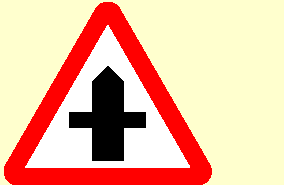
The priority through the junction is shown by the broader line. You need to be aware of the hazard posed by traffic crossing or pulling out onto a major road.
Which of these signs means that the national speed limit applies?


You should know the speed limit for the road on which you’re travelling and the vehicle that you’re driving. The different speed limits are shown in The Highway Code.
What does this sign mean?

When you leave the motorway, make sure that you check your speedometer. You may be going faster than you realise. Slow down and look for speed-limit signs.
When may you use hazard warning lights while you’re driving?
When there’s queuing traffic ahead and you have to slow down or even stop, briefly showing your hazard warning lights will help alert following traffic to the hazard.
What does this sign mean?

If you use the right-hand lane in a contraflow system, you’ll be travelling with no permanent barrier between you and the oncoming traffic. Observe speed limits and keep a good distance from the vehicle ahead.
What does this sign mean?

No entry’ signs are used in places such as one-way streets to prevent vehicles driving against the traffic. To ignore one would be dangerous, both for yourself and for other road users, as well as being against the law.
What does ’25’ mean on this motorway sign?

Before you set out on your journey, use a road map to plan your route. When you see an advance warning of your junction, make sure you get into the correct lane in plenty of time. Last-minute harsh braking and cutting across lanes at speed is extremely hazardous.
When may you cross a double solid white line in the middle of the road?

You may cross the solid white line to pass a stationary vehicle or to pass a pedal cycle, horse or road maintenance vehicle if it’s travelling at 10 mph or less. You may also cross the solid white line to enter a side road or access a property.
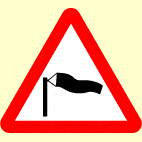
What are triangular signs for?
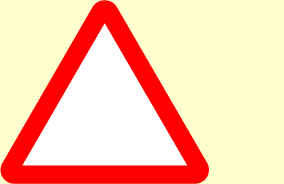
This type of sign warns you of hazards ahead. Make sure you look at each sign that you pass on the road, so that you don’t miss any vital instructions or information.
What must you do when you see this sign?
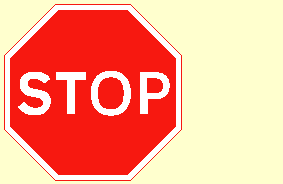
Stop’ signs are situated at junctions where visibility is restricted or where there’s heavy traffic. They must be obeyed: you must stop. Take good all-round observation before moving off.
Which type of sign tells you not to do something?



Signs in the shape of a circle give orders. A sign with a red circle means that you aren’t allowed to do something. Study Know Your Traffic Signs to ensure that you understand what the different traffic signs mean.
What speed limit is often found in narrow residential streets?
In some built-up areas, you may find the speed limit reduced to 20 mph. Driving at a slower speed will help give you the time and space to see and deal safely with hazards such as pedestrians and other vulnerable road users.
What does this sign mean?

This type of sign warns you of hazards ahead. Make sure you look at each sign and road marking that you pass, so that you don’t miss any vital instructions or information. This particular sign shows there’s a T-junction with priority over vehicles from the right.
Which sign means that pedestrians may be walking along the road?
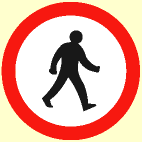
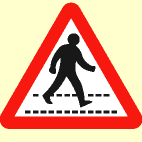

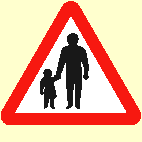
When you pass pedestrians in the road, leave plenty of room. You might have to use the right-hand side of the road, so look well ahead, as well as in your mirrors, before pulling out. Take great care if a bend in the road obscures your view ahead.
What does this sign mean?

These signs indicate places of interest and are designed to guide you by the easiest route. They’re particularly useful when you’re unfamiliar with the area.
What does this white line along the centre of the road mean?

The centre of the road is usually marked by a broken white line, with lines that are shorter than the gaps. When the lines become longer than the gaps, this is a hazard warning line. Look well ahead for these, especially when you’re planning to overtake or turn off.
You see this signal overhead on the motorway. What does it mean?

You’ll see this sign if there has been an incident ahead and the motorway is closed. You must obey the sign. Make sure that you prepare to leave in good time. Don’t cause drivers to take avoiding action by cutting in at the last moment.
What does this sign mean?
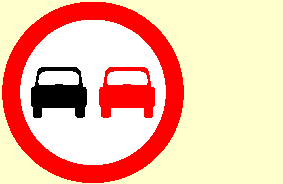
Road signs that prohibit overtaking are placed in locations where passing the vehicle in front is dangerous. If you see this sign, don’t attempt to overtake. The sign is there for a reason; you must obey it.
Where on a motorway would you find green reflective studs?
Knowing the colours of the reflective studs on the road will help you judge your position, especially at night, in foggy conditions or when visibility is poor.
What does this motorway sign mean?
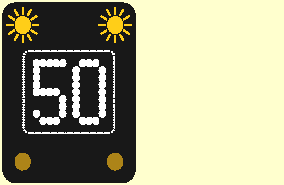
Look out for signs above your lane or on the central reservation. These will give you important information or warnings about the road ahead. To allow for the high speed of motorway traffic, these signs may light up some distance from any hazard. Don’t ignore the signs just because the road looks clear to you.
You’re in a tunnel and you see this sign. What does it mean?

If you have to leave your vehicle and get out of a tunnel by an emergency exit, do so as quickly as you can. Follow the signs directing you to the nearest exit point. If there are several people using the exit, don’t panic but try to leave in a calm and orderly manner.
What does this sign mean?

When you see this sign, look out for any direction signs and judge whether you need to signal your intentions. Do this in good time so that other road users approaching the roundabout know what you’re planning to do.
Share your Results: