
Incidents, Accidents, Emergencies
A casualty isn’t breathing normally. Chest compressions should be given. At what rate?
If a casualty isn’t breathing normally, chest compressions may be needed to maintain circulation. Place two hands on the centre of the chest and press down hard and fast
At an incident, it’s important to look after any casualties. What should you do with them when the area is safe?
When the area is safe and there’s no danger from other traffic or fire, it’s better not to move casualties. Moving them may cause further injury.
You arrive at an incident. A pedestrian is bleeding heavily from a leg wound. The leg isn’t broken and there’s nothing in the wound. What should you do?
If there’s nothing in the wound, applying a pad of clean cloth or bandage will help stem the bleeding. Raising the leg will also lessen the flow of blood. Don’t tie anything tightly round the leg, as this will restrict circulation and could result in long-term injury.
You’re going through a long tunnel. What will warn you of congestion or an incident ahead?
Follow the instructions given by the signs or by tunnel officials. In congested tunnels, a minor incident can soon turn into a major one, with serious or even fatal results.
You’ve broken down on a motorway. When you use the emergency telephone, what will you be asked for?
Have the correct details ready before you use the emergency telephone. The operator will need to know the details of your vehicle and its fault. For your own safety, always face the traffic when you speak on a roadside telephone.
There’s been a collision. A driver is suffering from shock. What should you do?
A casualty suffering from shock may have injuries that aren’t immediately obvious. Call the emergency services, then stay with the person in shock, offering reassurance until the experts arrive.
You’re driving through a tunnel and the traffic is flowing normally. What should you do?
Before entering a tunnel, you should switch on your dipped headlights, as this will allow you to see and be seen. In many tunnels, it’s a legal requirement. Don’t wear sunglasses while driving in a tunnel. You may wish to tune your radio to a local channel for traffic information.
You’re in a tunnel. Your vehicle is on fire and you can’t drive it. What should you do?
It’s usually better to drive a burning vehicle out of a tunnel. If you can’t do this, pull over and stop at an emergency point if possible. Switch off the engine, use hazard warning lights, and leave the vehicle immediately. Call for help from the nearest emergency point. If you have an extinguisher it may help to put out a small fire, but don’t try to tackle a large one.
Advertisement
ArrayWhat should you carry for use in the event of a collision?
At an incident, what should you do with a casualty who has stopped breathing?
Unblocking the casualty’s airway and gently tilting their head back will help them to breathe. They’ll then be in the correct position if mouth-to-mouth resuscitation is required. Don’t move a casualty unless there’s further danger.
Your tyre bursts while you’re driving. What should you do?
A tyre bursting can lead to a loss of control, especially if you’re travelling at high speed. Using the correct procedure should help you to stop the vehicle safely.
You’re the first to arrive at the scene of a crash. What should you do?
At a crash scene you can help in practical ways, even if you aren’t trained in first aid. Call the emergency services and make sure you don’t put yourself or anyone else in danger. The safest way to warn other traffic is by switching on your hazard warning lights.
At an incident, someone is unconscious. What would your priority be?
Remember this procedure by saying DR ABC. This stands for Danger, Response, Airway, Breathing, Compressions. Give whatever first aid you can and stay with the injured person until the emergency services arrive.
You’re the first person to arrive at an incident where people are badly injured. You’ve switched on your hazard warning lights and checked all engines are stopped. What else should you do?
If you’re the first to arrive at a crash scene, the first concerns are the risk of further collision and fire. Ensuring that vehicle engines are switched off will reduce the risk of fire. Use hazard warning lights so that other traffic knows there’s a need for caution. Make sure the emergency services are contacted; don’t assume this has already been done.
You’re involved in a collision. Afterwards, which document may the police ask you to produce?
When should you use hazard warning lights?
Hazard warning lights are fitted to all modern cars and some motorcycles. They should be used to warn other road users when your vehicle is causing a temporary obstruction; for example, after a collision or when it’s broken down, and following drivers on a motorway of a hazard or obstruction ahead. They shouldn’t be used as an excuse for dangerous or illegal parking.
While you’re driving, a warning light on your vehicle’s instrument panel comes on. What should you do?
Make sure you know what the different warning lights mean. An illuminated warning light could mean that your car is unsafe to drive. If you aren’t sure about the problem, get a qualified mechanic to check it.
A tanker is involved in a collision. Which sign shows that it’s carrying dangerous goods?
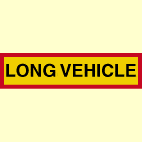
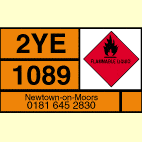


There will be an orange label on the side and rear of the tanker. Look at this carefully and report what it says when you phone the emergency services. Details of hazard warning plates are given in The Highway Code.
Your vehicle has a puncture on a motorway. What should you do?
Pull up on the hard shoulder and make your way to the nearest emergency telephone to call for assistance. Don’t attempt to repair your vehicle while it’s on the hard shoulder, because of the risk posed by traffic passing at high speeds.
You arrive at the scene of a motorcycle crash. No other vehicle is involved. The rider is unconscious and lying in the middle of the road. What’s the first thing you should do at the scene?
The motorcyclist is in an extremely vulnerable position, exposed to further danger from traffic. Approaching vehicles need advance warning in order to slow down and safely take avoiding action or stop. Don’t put yourself or anyone else at risk. Use the hazard warning lights on your vehicle to alert other road users to the danger.
At an incident, a casualty is unconscious but breathing. When should you move them?
Don’t move a casualty unless there’s further danger; for example, from other traffic or fire. They may have unseen or internal injuries. Moving them unnecessarily could cause further injury. Don’t remove a motorcyclist’s helmet unless it’s essential.
At an incident, someone is suffering from severe burns. What should you do to help them?
Your priority is to cool the burns with a clean, cool, non-toxic liquid, preferably water. Its coolness will help take the heat out of the burns and relieve the pain. Keep the wound doused for at least 10 minutes. If blisters appear, don’t attempt to burst them, as this could lead to infection.
An injured person has been placed in the recovery position. They’re unconscious but breathing normally. What else should be done?
After a casualty has been placed in the recovery position, make sure their airway remains open and monitor their condition until medical help arrives. Where possible, don’t move a casualty unless there’s further danger.
You lose control of your car and damage a garden wall. No-one is around. What must you do?
If the property owner isn’t available at the time, you must inform the police about the incident. This should be done as soon as possible, and in any case within 24 hours.
You’re driving on a motorway. When can you use hazard warning lights?
Briefly using your hazard warning lights will warn the traffic travelling behind you that there’s a hazard ahead. This can reduce the chance of vehicles crashing into the back of each other.
You’re in collision with another moving vehicle. Someone is injured and your vehicle is damaged. What information should you find out?
Try to keep calm and don’t rush. Make sure that you’ve shared all the relevant details with the other driver before you leave the scene. If possible, take pictures and note the positions of all the vehicles involved.
Following a collision, someone has suffered a burn. The burn needs to be cooled. What’s the shortest time it should be cooled for?
Check the casualty for shock and, if possible, try to cool the burn for at least 20 minutes. Use a clean, cool, non-toxic liquid, preferably water.
You’re on the motorway. Luggage falls from your vehicle. What should you do?
If any object falls onto the motorway carriageway from your vehicle, pull onto the hard shoulder near an emergency telephone and call for assistance. Don’t stop on the carriageway or attempt to retrieve anything.
You break down on a level crossing. The lights haven’t yet begun to flash. What’s the first thing you should do?
If your vehicle breaks down on a level crossing, your first priority is to get everyone out of the vehicle and clear of the crossing. Then use the railway telephone, if there is one, to tell the signal operator. If you have time before the train arrives, move the vehicle clear of the crossing, but only do this if alarm signals are not on.
What should you do as you approach a long road tunnel?
On the approach to tunnels, a sign will usually show a local radio channel. This should give a warning of any incidents or congestion in the tunnel ahead. Many radios can be set to automatically pick up traffic announcements and local frequencies. If you have to tune the radio manually, don’t be distracted while doing so. Incidents in tunnels can lead to serious casualties. The greatest hazard is fire. Getting an advance warning of problems could save your life and others.
At an incident, a casualty is unconscious. You need to check whether they’re breathing. How long should you allow for this check?
Once the casualty’s airway is open, listen and feel for breath. Do this by placing your cheek over their mouth and nose, and look to see if their chest rises. This should be done for up to 10 seconds. If you cannot detect any breathing, you should begin compressions.
A person has been injured. They may be suffering from shock. What are the warning signs to look for?
The effects of shock may not be immediately obvious. Warning signs are rapid pulse, sweating, pale grey skin and rapid shallow breathing.
At an incident, a casualty isn’t breathing. What should you do while helping them to start breathing again?
It’s important to ensure that the airways are clear before you start mouth-to-mouth resuscitation. Gently tilt their head back and use your finger to check for and remove any obvious obstruction in the mouth.
What safeguard could you take against fire risk to your vehicle?
The fuel in your vehicle can be a dangerous fire hazard. If you smell fuel, check out where it’s coming from. Never use a naked flame near the vehicle if you can smell fuel or smoke when refuelling your vehicle.
Your vehicle has broken down on an automatic railway level crossing. What should you do first?
First, get yourself and anyone else well away from the crossing. If there’s a railway telephone, use that to get instructions from the signal operator. Then, if there’s time, move the vehicle clear of the crossing.
After a collision, someone is unconscious in their vehicle. When should you call the emergency services?
It’s important to make sure that the emergency services arrive as soon as possible. When a person is unconscious, they could have serious injuries that aren’t immediately obvious.
Before driving through a tunnel, what should you do?
If you’re wearing sunglasses, you should remove them before driving into a tunnel. If you don’t, your vision will be restricted, even in tunnels that appear to be well lit.
You arrive at an incident. There’s no danger from fire or further collisions. What’s your first priority when attending to an unconscious motorcyclist?
At the scene of an incident, always be aware of danger from further collisions or fire. The first priority when dealing with an unconscious person is to ensure they can breathe. This may involve clearing their airway if you can see an obstruction or if they’re having difficulty breathing.
You see a car on the hard shoulder of a motorway with a ‘help’ pennant displayed. What does this mean?
If a disabled driver’s vehicle breaks down and they’re unable to walk to an emergency phone, they’re advised to stay in their car and switch on the hazard warning lights. They may also display a ‘help’ pennant in their vehicle.
There’s been a collision. A motorcyclist is lying injured and unconscious. Unless it’s essential, why should you not usually attempt to remove their helmet?
When someone is injured, any movement that isn’t absolutely necessary should be avoided, since it could make the injuries worse. Unless it’s essential to remove a motorcyclist’s helmet, it’s generally safer to leave it in place.
You’ve broken down on a two-way road. You have a warning triangle. At least how far from your vehicle should you place the warning triangle?

Advance warning triangles fold flat and don’t take up much room. Use one to warn other road users if your vehicle has broken down or if there has been an incident. Place it at least 45 metres (147 feet) behind your vehicle (or the incident), on the same side of the road or verge. Place it further back if the scene is hidden by, for example, a bend, hill or dip in the road. Don’t use warning triangles on motorways.
You’re going through a congested tunnel and have to stop. What should you do?
It’s important to keep a safe distance from the vehicle in front at all times. This still applies in congested tunnels, even if you’re moving very slowly or have stopped. If the vehicle in front breaks down, you may need room to manoeuvre past it.
Your vehicle breaks down in a tunnel. What should you do?
A broken-down vehicle in a tunnel can cause serious congestion and danger to other road users. If your vehicle breaks down, get help without delay. Switch on your hazard warning lights, then go to an emergency telephone to call for help.
You’ve stopped at an incident to give help. What should you do?
There are a number of things you can do to help, even without expert training. Be aware of further danger from other traffic and fire; make sure the area is safe. People may be in shock. Don’t give them anything to eat or drink. Keep them warm and comfortable and reassure them. Don’t move injured people unless there’s a risk of further danger.
An injured motorcyclist is lying unconscious in the road. The traffic has stopped and there’s no further danger. What should you do to help?
If someone has been injured, the sooner proper medical attention is given the better. Ask someone to phone for help or do it yourself. An injured person should only be moved if they’re in further danger. An injured motorcyclist’s helmet shouldn’t be removed unless it’s essential.
On a motorway, when should the hard shoulder be used?
The hard shoulder should only be used in a genuine emergency. If possible, and if it’s safe, use a roadside telephone to call for help. This will give your exact location to the operator. Never cross the carriageway or a slip road to use a telephone on the other side of the road.
You arrive at the scene of a crash. Someone is bleeding badly from an arm wound. Nothing is embedded in it. What should you do?
If possible, lay the casualty down. Check for anything that may be in the wound. Apply firm pressure to the wound using clean material, without pressing on anything that might be in it. Raising the arm above the level of the heart will also help to stem the flow of blood.
When are you allowed to use hazard warning lights?
You mustn’t use hazard warning lights while moving, except to warn traffic behind when you slow suddenly on a motorway or unrestricted dual carriageway. Never use hazard warning lights to excuse dangerous or illegal parking.
You’ve stalled in the middle of a level crossing and can’t restart the engine. The warning bells start to ring. What should you do?
Try to stay calm, especially if you have passengers with you. If you can’t restart your engine before the warning bells ring, leave the vehicle and get yourself and any passengers well clear of the crossing.
An adult casualty isn’t breathing. To maintain circulation, compressions should be given. What’s the correct depth to press for each compression?
An adult casualty isn’t breathing normally. To maintain circulation, place two hands on the centre of the chest. Then press down hard and fast
Your vehicle catches fire while driving through a tunnel. It’s still driveable. What should you do?
If it’s possible, and you can do so without causing further danger, it may be safer to drive a vehicle that’s on fire out of a tunnel. The greatest danger in a tunnel fire is smoke and suffocation.
A casualty has an injured arm. They can move it freely but it’s bleeding. Why should you get them to keep it in a raised position?
If a casualty is bleeding heavily, raise the limb to a higher position. This will help to reduce the blood flow. Before raising the limb, you should make sure that it isn’t broken.
You’re at the scene of an incident. Someone is suffering from shock. How should you treat them?
If someone is suffering from shock, try to keep them warm and as comfortable as you can. Don’t give them anything to eat or drink but reassure them confidently and try not to leave them alone.
You have a collision while your car is moving. What’s the first thing you must do?
If you’re in a collision that causes damage or injury to any other person, vehicle, animal or property, by law you must stop. Give your name, the vehicle owner’s name and address, and the vehicle’s registration number to anyone who has reasonable grounds for requesting them.
At an incident, a small child isn’t breathing. To restore normal breathing, how should you breathe into their mouth?
If a young child has stopped breathing, first check that their airway is clear. Then give compressions to the chest using one hand (two fingers for an infant) and begin mouth-to-mouth resuscitation. Breathe very gently and continue the procedure until they can breathe without help.
You arrive at the scene of a motorcycle crash. The rider is injured. When should their helmet be removed?
Don’t remove a motorcyclist’s helmet unless it’s essential. Remember they may be suffering from shock. Don’t give them anything to eat or drink, but do reassure them confidently.
A collision has just happened. An injured person is lying in a busy road. What’s the first thing you should do to help?
The most immediate danger is further collisions and fire. You could warn other traffic by switching on hazard warning lights, displaying an advance warning triangle or sign (but not on a motorway), or by any other means that doesn’t put you or others at risk.
What should you do if you see a large box fall from a lorry onto the motorway?
Lorry drivers can be unaware of objects falling from their vehicles. If you see something fall onto a motorway, look to see if the driver pulls over. If they don’t stop, don’t attempt to retrieve the object yourself. Pull onto the hard shoulder near an emergency telephone and report the hazard.
Share your Results: