
Vulnerable Road Users theory test
How should you overtake horse riders?
When you decide to overtake a horse rider, make sure you can do so safely before you move out. Leave them plenty of room and pass slowly. Passing too closely at speed could startle the horse and unseat the rider.
Which is the most vulnerable road user at road junctions?
Pedestrians and riders on two wheels can be harder to see than other road users. Make sure you look for them, especially at junctions. Effective observation, coupled with appropriate action, can save lives.
You’re turning left at a junction where pedestrians have started to cross. What should you do?

When you’re turning into a side road, pedestrians who are crossing have priority. You should wait to allow them to finish crossing safely. Be patient if they’re slow or unsteady. Don’t try to rush them by sounding your horn, flashing your lights, revving your engine or giving any other inappropriate signal.
You’re about to reverse into a side road. A pedestrian is waiting to cross behind you. What should you do?
If you need to reverse into a side road, try to find a place that’s free from traffic and pedestrians. Look all around before and during the manoeuvre. Stop and give way to any pedestrians who want to cross behind you. Avoid waving them across, sounding the horn, flashing your lights or giving any signals that could mislead them and create a dangerous situation.
You’re driving in town. There’s a bus at the bus stop on the other side of the road. Why should you be careful?
If you see a bus ahead, watch out for pedestrians. They might not be able to see you if they’re crossing from behind the bus.
Why will a motorcyclist look round over their right shoulder just before turning right?
To check for traffic in their blind area
In daylight, an approaching motorcyclist is using dipped headlights. Why?
A motorcycle can be lost from sight behind another vehicle. The use of the headlights helps to make it more conspicuous and therefore more easily seen.
You’re waiting to come out of a side road. Why should you look carefully for motorcycles?
If you’re waiting to emerge from a side road, look carefully for motorcycles: they can be difficult to see. Be especially careful if there are parked vehicles or other obstructions restricting your view.
Advertisement
ArrayYou see a pedestrian with a dog wearing a yellow or burgundy coat. What does this indicate?
Dogs trained to help deaf people have a yellow or burgundy coat. If you see one, you should take extra care, as the pedestrian may not be aware of vehicles approaching.
You’re unsure what a slow-moving motorcyclist ahead of you is going to do. What should you do?
When a motorcyclist is travelling slowly, it’s likely that they’re looking for a turning or entrance. Be patient and stay behind them in case they stop or change direction suddenly.
Why must these road markings be kept clear?
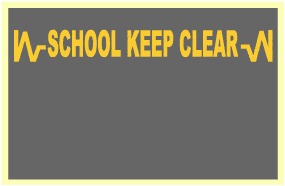
The markings are there to show that the area must be kept clear. This is to allow an unrestricted view for approaching drivers and riders, and children wanting to cross the road.
What does this sign tell you?
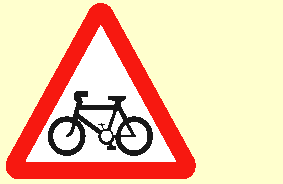
With people’s concern today for the environment, cycle routes are being extended in our towns and cities. Respect the presence of cyclists on the road and give them plenty of room if you need to pass.
How will a school crossing patrol signal you to stop?
If a school crossing patrol steps out into the road with a ‘stop’ sign, you must stop. Don’t wave anyone across the road and don’t get impatient or rev your engine.
You’re driving past a line of parked cars. You notice a ball bouncing out into the road ahead. What should you do?

Beware of children playing in the street and running out into the road. If a ball bounces out from the pavement, slow down and be prepared to stop. Don’t encourage anyone to retrieve it. Other road users may not see your signal and you might lead a child into a dangerous situation.
You’re driving in a slow-moving queue of traffic. Just before changing lane, what should you do?
In queuing traffic, motorcyclists could be passing you on either side. Use your mirrors and check your blind area before changing lanes or changing direction.
What should you do when following a car driven by an elderly driver?
You must show consideration to other road users. The reactions of older drivers may be slower and they might need more time to deal with a situation. Be tolerant and don’t lose patience or show annoyance.
Where would you see this sign?

It may not be possible to see a small child through the rear windscreen of your vehicle. Be aware of this before you reverse. If there are children about, get out and check that it’s clear before reversing.
You’re driving past parked cars. You notice a bicycle wheel sticking out between them. What should you do?
Scan the road as you drive. Try to anticipate hazards by being aware of the places where they’re likely to occur. You’ll then be able to react in good time.
You’re driving towards a zebra crossing. A person in a wheelchair is waiting to cross. What should you do?
You should slow down and be prepared to stop, as you would for an able-bodied person. Don’t wave them across, as other traffic may not stop.
Why should you look particularly for motorcyclists and cyclists at junctions?
Cyclists and motorcyclists are smaller than other vehicles and so are more difficult to see. They can easily be hidden from your view by cars parked near a junction.
There are flashing amber lights under a school warning sign. What action should you take?
The flashing amber lights are switched on to warn you that children may be crossing near a school. Slow down and take extra care, as you may have to stop.
You see a pedestrian carrying a white stick with a red band. What does this tell you?
When someone is deaf as well as blind, they may carry a white stick with a red reflective band. They may not be aware that you’re approaching and they may not be able to hear anything; so, for example, your horn would be ineffective as a warning to them.
What’s the purpose of these road markings?
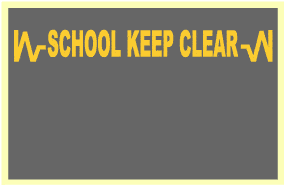
These markings are found on the road outside schools. Don’t stop or park on them, even to set down or pick up children. The markings are there to ensure that drivers, riders, children and other pedestrians have a clear view of the road in all directions.
The left-hand pavement is closed due to street repairs. What should you do?
Where street repairs have closed off pavements, proceed carefully and slowly, as pedestrians might have to walk in the road.
What does a flashing amber beacon mean when it’s on a moving vehicle?
Different coloured beacons warn of different types of vehicle needing special attention. Blue beacons are used on emergency vehicles that need priority. Green beacons are found on doctors’ cars. Amber beacons generally denote slower moving vehicles, which are often large. These vehicles are usually involved in road maintenance or local amenities and make frequent stops.
What does this sign mean?
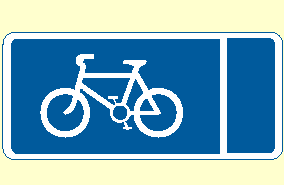
Usually, a picture of a cycle will also be painted on the road, and sometimes the lane will have a different coloured surface. Leave these areas clear for cyclists and don’t pass too closely when you overtake.
What must a driver do at a pelican crossing when the amber light is flashing?
The flashing amber light allows pedestrians already on the crossing to get to the other side before a green light shows to the traffic. Be aware that some pedestrians, such as elderly people and young children, need longer to cross. Let them do this at their own pace.
You want to reverse into a side road, but you aren’t sure that the area behind your car is clear. What should you do?
If you can’t tell whether there’s anything behind you, it’s always safest to check before reversing. There may be a small child or a low obstruction close behind your car.
You’re on a country road. What should you expect to see coming towards you on your side of the road?
On a quiet country road, always be aware that there may be a hazard just around the next bend, such as a slow-moving vehicle or pedestrians. Pedestrians are advised to walk on the right-hand side of the road if there’s no pavement, so they may be walking towards you on your side of the road.
At night, you see a pedestrian wearing reflective clothing and carrying a bright red light. What does this mean?
The people on the walk should be keeping to the left, but don’t assume this. Pass carefully, making sure you have time to do so safely. Be aware that the pedestrians have their backs to you and may not know that you’re there.
You see a horse rider as you approach a roundabout. What should you do if they’re signalling right but keeping well to the left?

Allow the horse rider to enter and exit the roundabout in their own time. They may feel safer keeping to the left all the way around the roundabout. Don’t get up close behind or alongside them, because that would probably upset the horse and create a dangerous situation.
What should you do when you’re following a learner driver who stalls at a junction?
Learning to drive is a process of practice and experience. Try to understand this and tolerate those who make mistakes while they’re learning.
Where should you never overtake a cyclist?
If you want to turn left and there’s a cyclist in front of you, hold back. Wait until the cyclist has passed the junction and then turn left behind them. Don’t try to intimidate them by driving too closely.
You’re approaching this roundabout and see the cyclist signal right. Why is the cyclist keeping to the left?

Cycling in today’s heavy traffic can be hazardous. Some cyclists may not feel happy about crossing the path of traffic to take up a position in an outside lane. Be aware of this and understand that, although they’re in the left-hand lane, the cyclist might be turning right.
You’re travelling behind a moped. What should you do when you want to turn left just ahead?
Passing the moped and turning into the junction could mean that you cut across the front of the rider. This might force them to slow down, stop or even lose control. Stay behind the moped until it has passed the junction and then you can turn without affecting the rider.
You’re at the front of a queue of traffic waiting to turn right into a side road. Why is it important to check your right mirror just before turning?
A motorcyclist could be riding along the outside of the queue. Always check your mirror before turning, as situations behind you can change in the time you’ve been waiting to turn.
What should you do when you’re following a motorcyclist along a road that has a poor surface?
To avoid being unbalanced, a motorcyclist might swerve to avoid potholes and bumps in the road. Be prepared for this and allow them extra space.
You’re turning left into a side road. What hazard should you be especially aware of?
Make sure that you’ve reduced your speed and are in the correct gear for the turn. Look into the road before you turn and always give way to any pedestrians who are crossing.
Which of these should you allow extra room when overtaking?
Don’t pass cyclists too closely, as they may need to veer around a pothole or other obstacle, be buffeted by side winds, or be made unsteady by your vehicle. Always leave as much room as you would for a car, and don’t cut in front of them.
You want to turn right from a junction but your view is restricted by parked vehicles. What should you do?
If you want to turn right from a junction and your view is restricted, stop. Ease forward until you can see
You want to turn right from a main road into a side road. What should you do just before turning?
In some circumstances, your indicators may be difficult to see and another road user may not realise you’re about to turn. A final check in your mirror and blind spot can help you to see an overtaking vehicle, so that you can avoid turning across their path.
You’re following a cyclist. What should you do when you wish to turn left just ahead?

Make allowances for cyclists, and give them plenty of room. Don’t overtake and then immediately turn left. Be patient and turn behind them when they’ve passed the junction.
When you’re overtaking a cyclist, you should leave as much room as you would give to a car. What’s the main reason for this?
Before overtaking, assess the situation. Look well ahead to see whether the cyclist will need to change direction. Be especially aware of a cyclist approaching parked vehicles, as they’ll need to alter course. Don’t pass too closely or cut in sharply.
What does this sign mean?
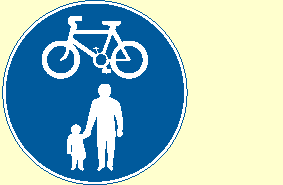
This sign shows a shared route for pedestrians and cyclists: when it ends, the cyclists will be rejoining the main road.
Why should motorcyclists wear bright clothing?
Motorcycles and scooters are generally smaller than other vehicles and can be difficult to see. Wearing bright clothing makes it easier for other road users to see a motorcyclist approaching, especially at junctions.
Which sign means that there may be people walking along the road?
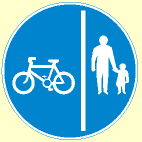
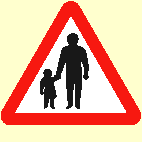
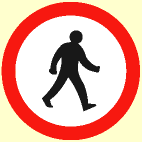
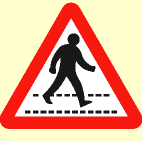
Always check the road signs. Triangular signs are warning signs: they inform you about hazards ahead and help you to anticipate any problems. There are a number of different signs showing pedestrians. Learn the meaning of each one.
You’re dazzled at night by a vehicle behind you. What should you do?
The interior mirror of most vehicles can be set to an anti-dazzle position. You’ll still be able to see the lights of the traffic behind you, but the dazzle will be greatly reduced.
Why is a toucan crossing different from other crossings?
Toucan crossings are shared by pedestrians and cyclists, who are permitted to cycle across. They’re shown the green light together. The signals are push-button-operated and there’s no flashing amber phase.
What should you do when passing sheep on a road?
Slow down and be ready to stop if you see animals in the road ahead. Animals are easily frightened by noise and vehicles passing too close to them. Stop if signalled to do so by the person in charge.
How would you react to drivers who appear to be inexperienced?
Learners might not have confidence when they first start to drive. Allow them plenty of room and don’t react adversely to their hesitation. We all learn from experience, but new drivers will have had less practice in dealing with all the situations that might occur.
Share your Results: